We said good-bye to Belgium, and hello to Germany! Cologne is usually less than a two hour train ride from Brussels, but unfortunately we had a delay of about three hours, which I don’t believe is normal from what I have experienced in train travel in Europe. What was cool is that we got a partial refund for our train trip, and I think I received it even before we got home.
We were staying at the CityClass Hotel Alter Markt. The hotel is in a great location – close to the Cologne Cathedral and the Rhine River, with many beer halls, restaurants, and cafes in the square. We had a comfortable room on the top floor with a nice view of the square.
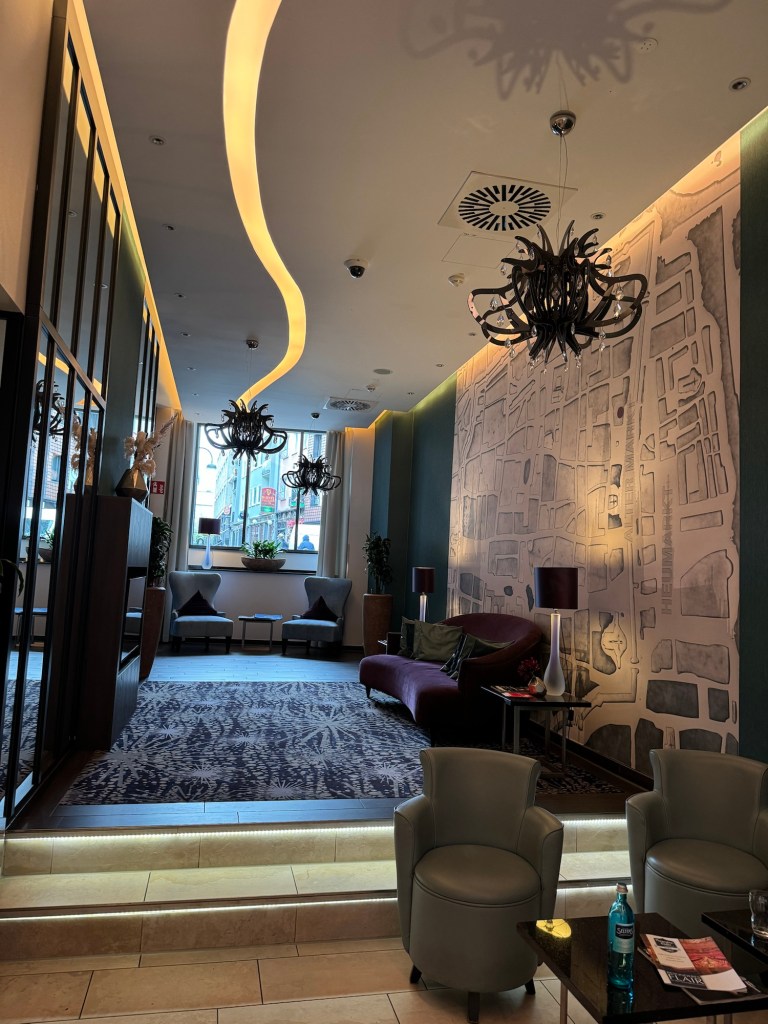
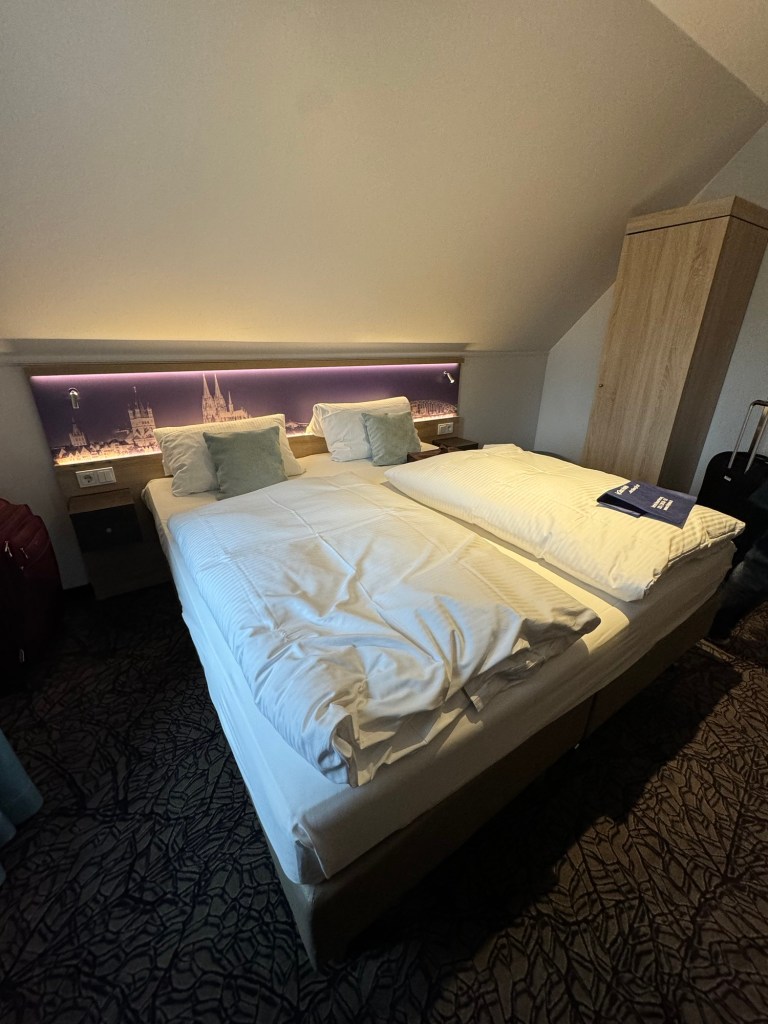

The Alter Markt is the hub of Old Town Cologne, and has been since medieval times. Cologne was heavily bombed during WWII, so many of the buildings and cobblestone streets have been reconstructed. It is a great place to while away your time.
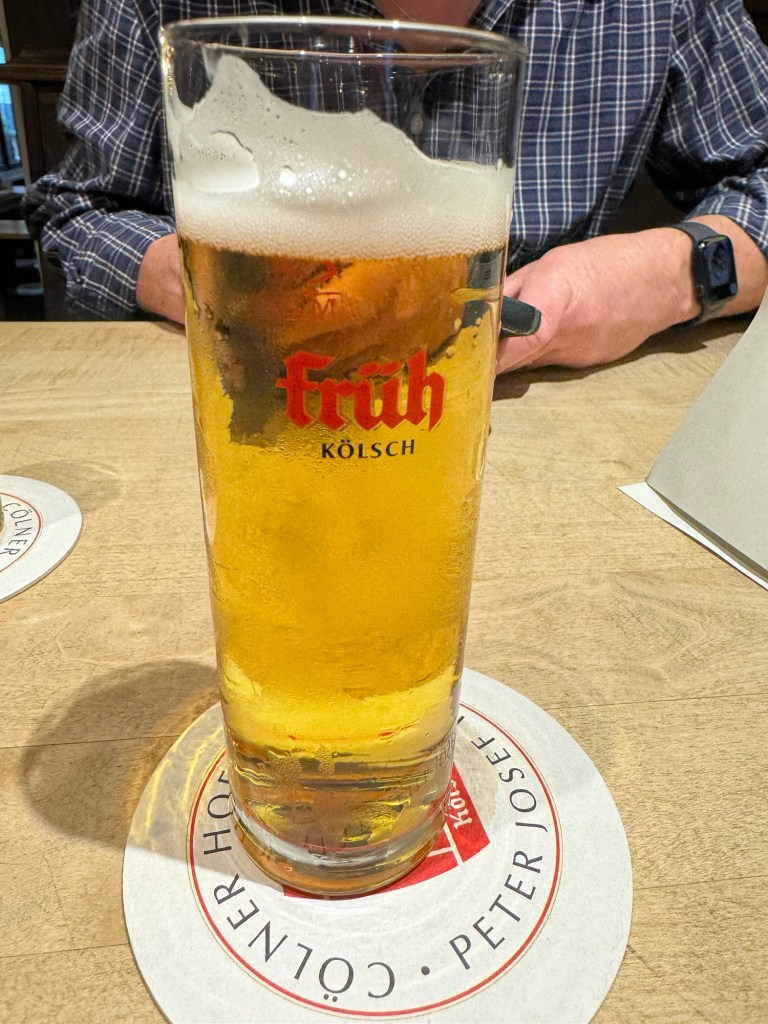
It was late afternoon and we were starving, so off we go in search of a typical Cologne beer hall for some food and drink. We found the Brauhaus FRŰH am Dom (FRŪH Brewery House at the Cathedral). Here we got acquainted with Kölsch beer, a nice, crisp, light-style beer with elements of both lagers and ales. The beers are served in a stange glass, a tall, thin glass that holds about six ounces of beer. This size is great for me, since I am a slow drinker and my beer tends to get warm before I finish it.


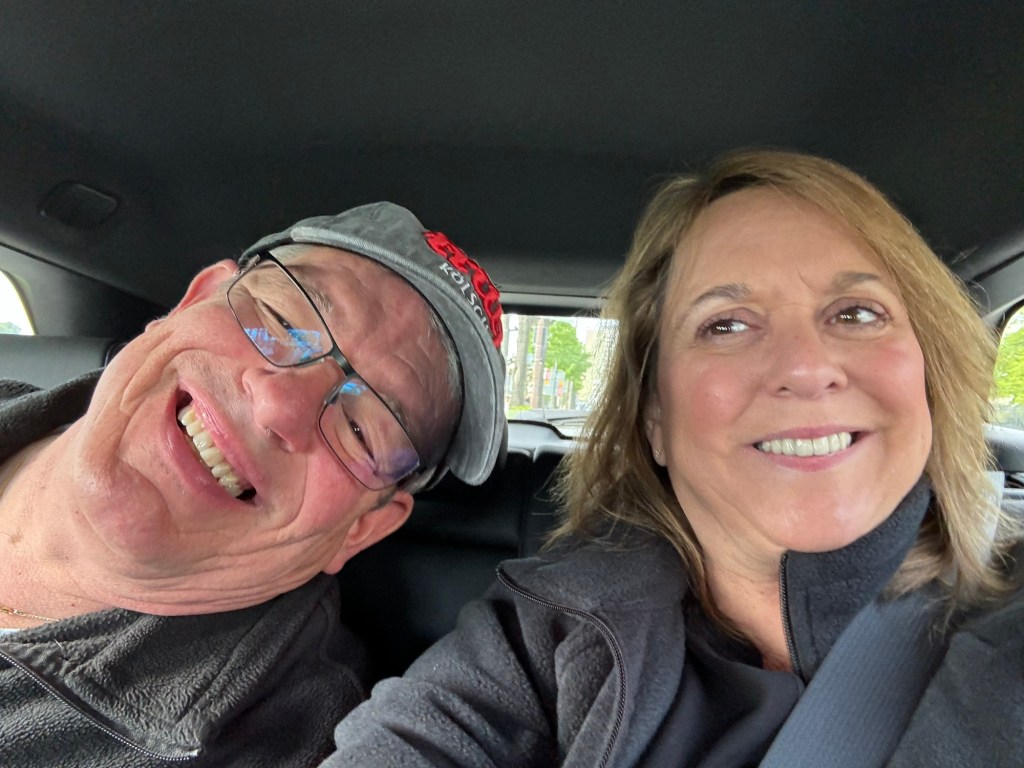
The next day was very rainy, and kind of set the tone for the rest of the trip. Thank goodness I brought The Hat! (To read more about The Hat, please read Our Irish Adventure – Galway)
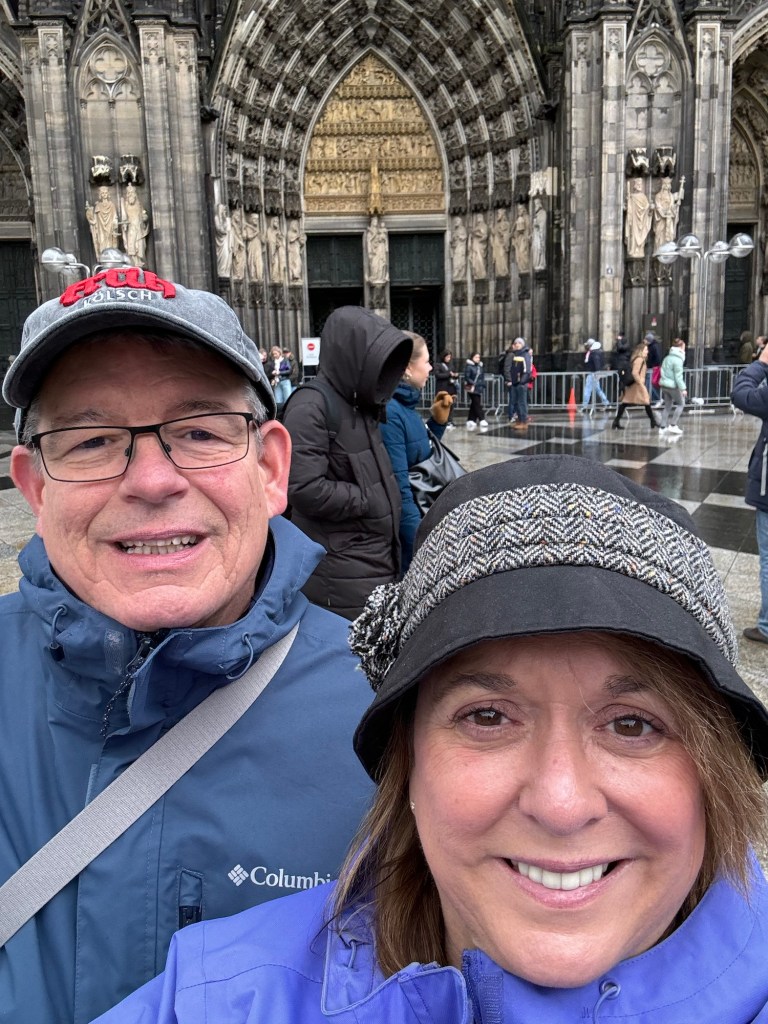
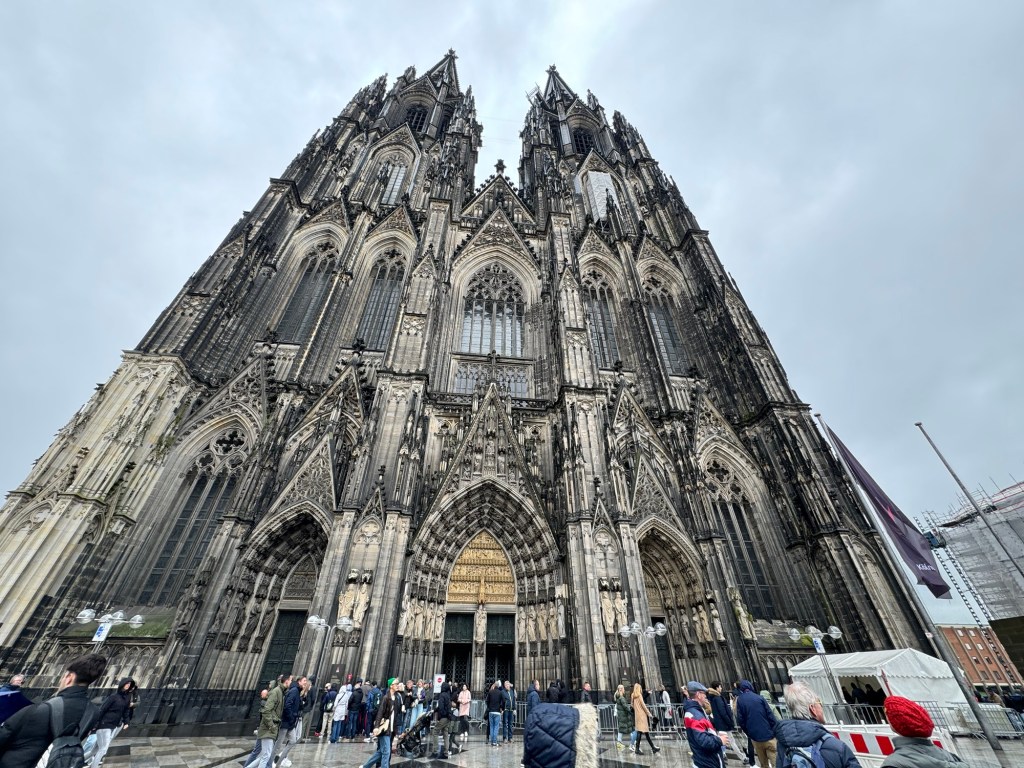
We visited the Cologne Cathedral, a massive structure close to the Rhine River and the Alter Markt. It is the tallest twin-spired church in the world, and Germany’s most visited landmark. You can’t miss its presence in the Cologne skyline!
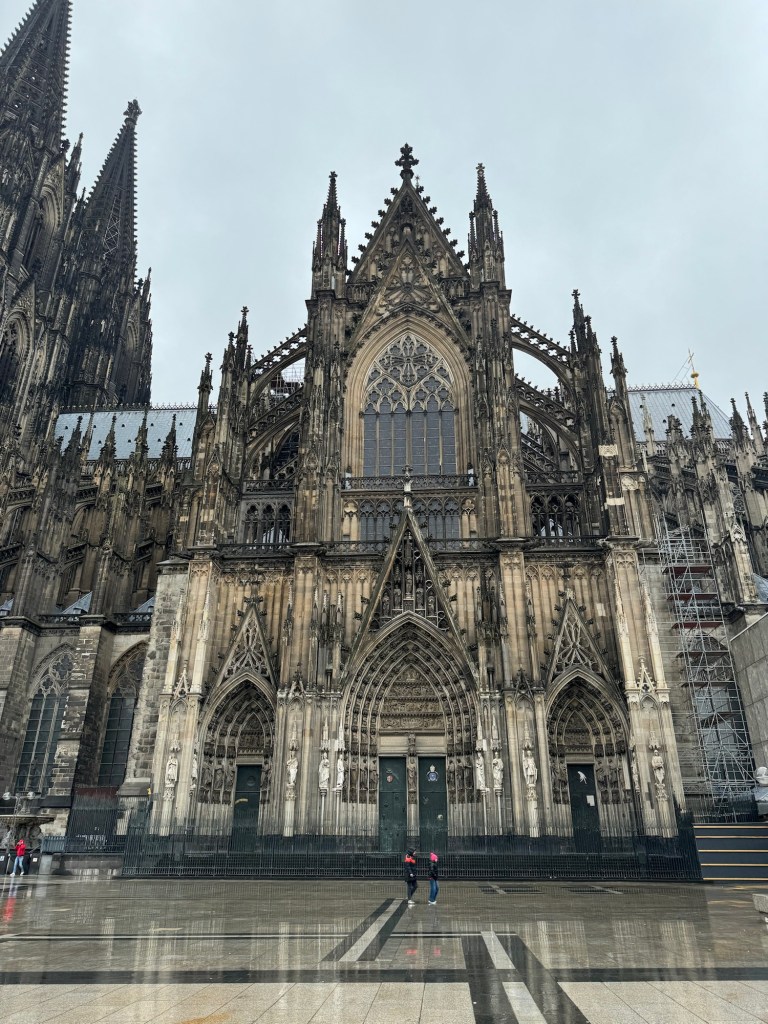
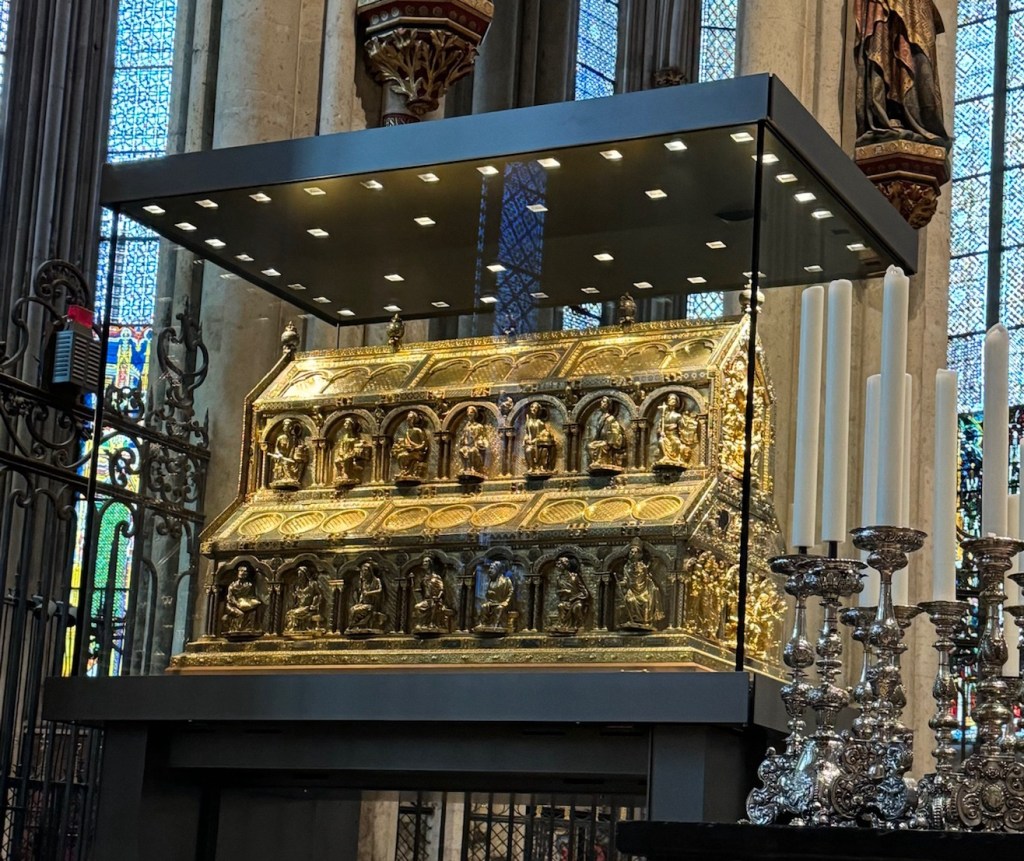
Construction of the cathedral began in 1248, but it was not fully completed until 1880. The Shrine of the Three Kings, a reliquary believed to contain the bones of the Magi, is housed in the cathedral.
Although damaged by bombs in WWII, the cathedral was one of the only buildings left standing in Cologne. There is also a connection to The Monuments Men movie – an American Catholic Chaplain, Philip Hannan, was able to sway the German Archbishop into signing a document giving the Americans authority to protect the art and liturgical objects in the cathedral after the war.
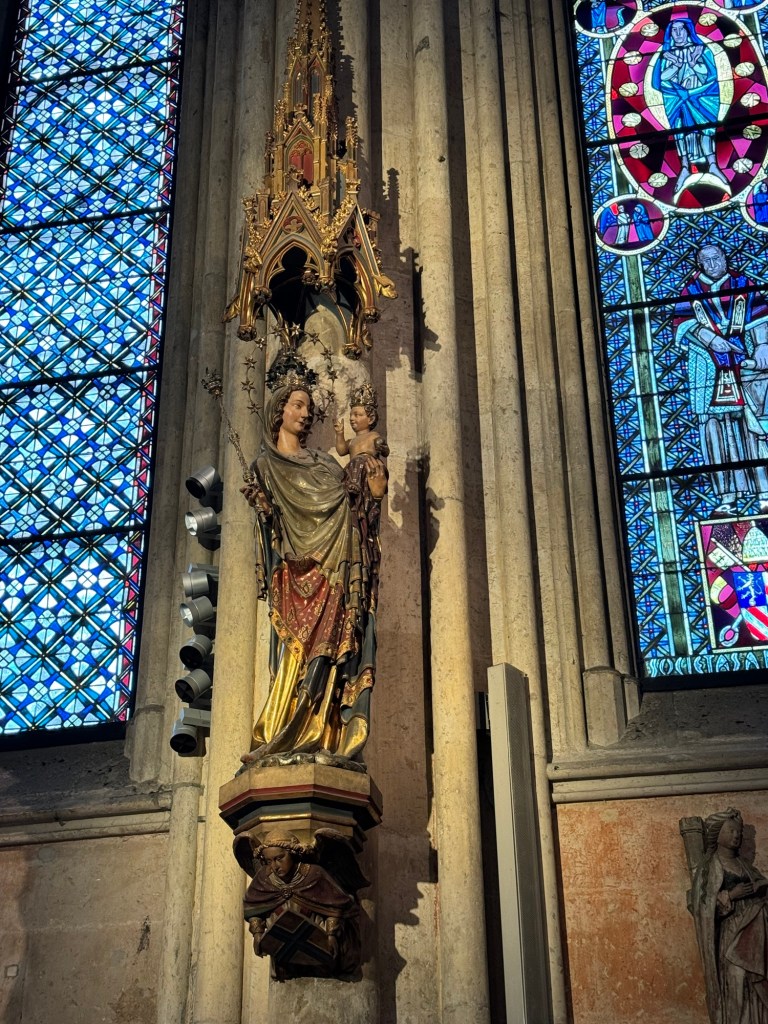
The outside of the cathedral is just as magnificent as the inside – but it was raining and pretty cold that day. Luckily the cathedral was close to our hotel so we could see it any time we ventured out. The inside is magnificent, full of art and treasures.


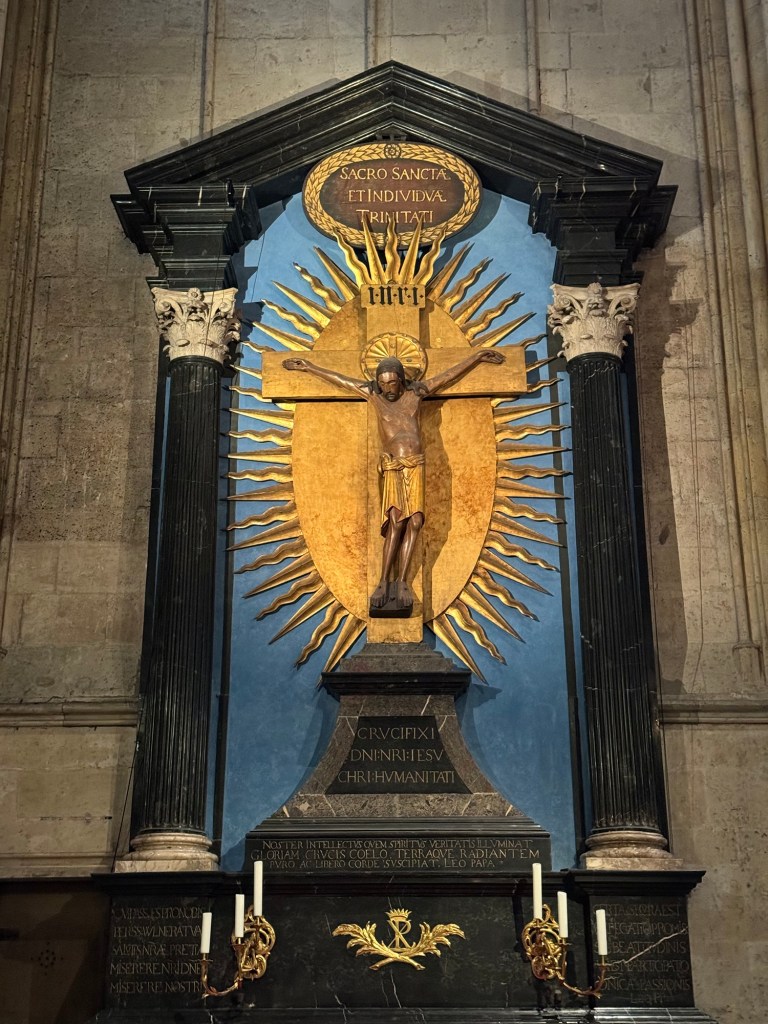
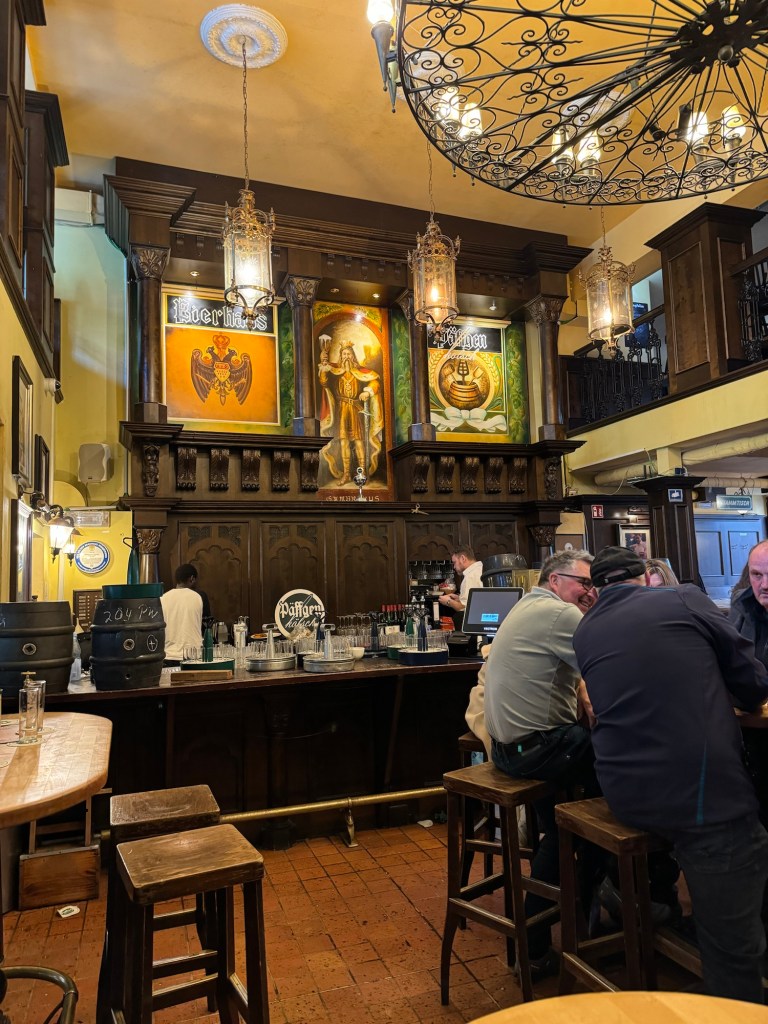
For lunch we went to Bierhaus en d’r Salzglass, a fun beer house with a lot of locals hanging out and getting ready for the soccer match that night.
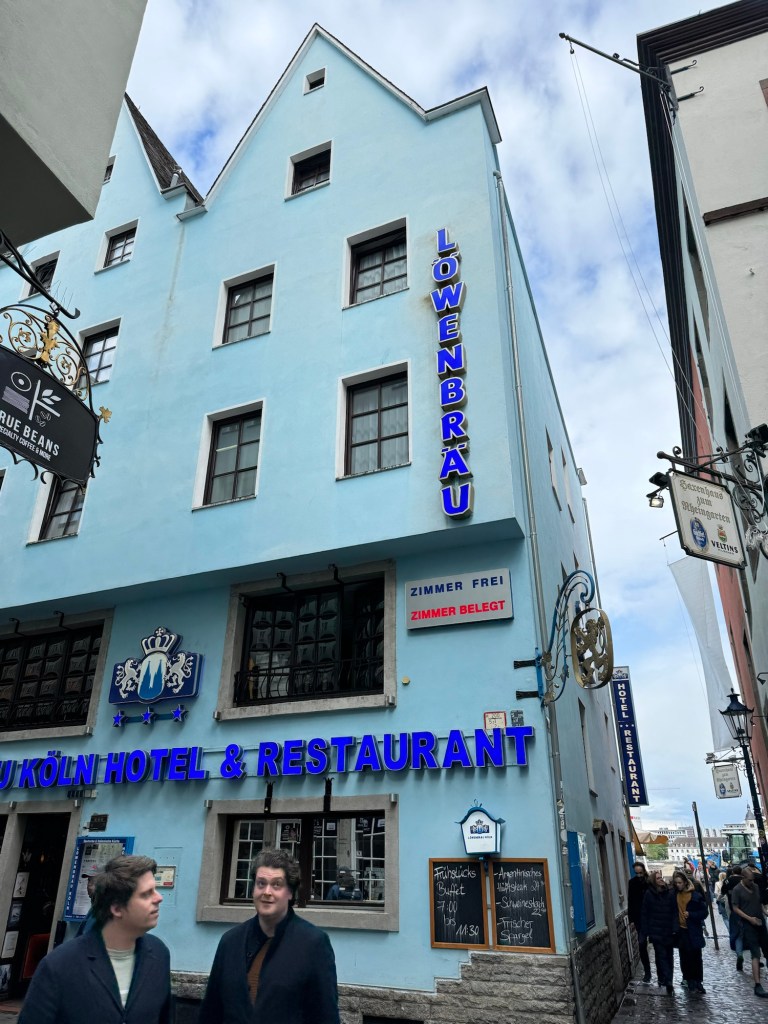
We had to stop and have a drink at Lowenbraü afterwards – I was known as Rentmeisterbraü in my younger days – I believe that nickname was coined by my friend Sharon LOL. This was the only place we went that served their beer in liter glasses, so of course I couldn’t finish it.

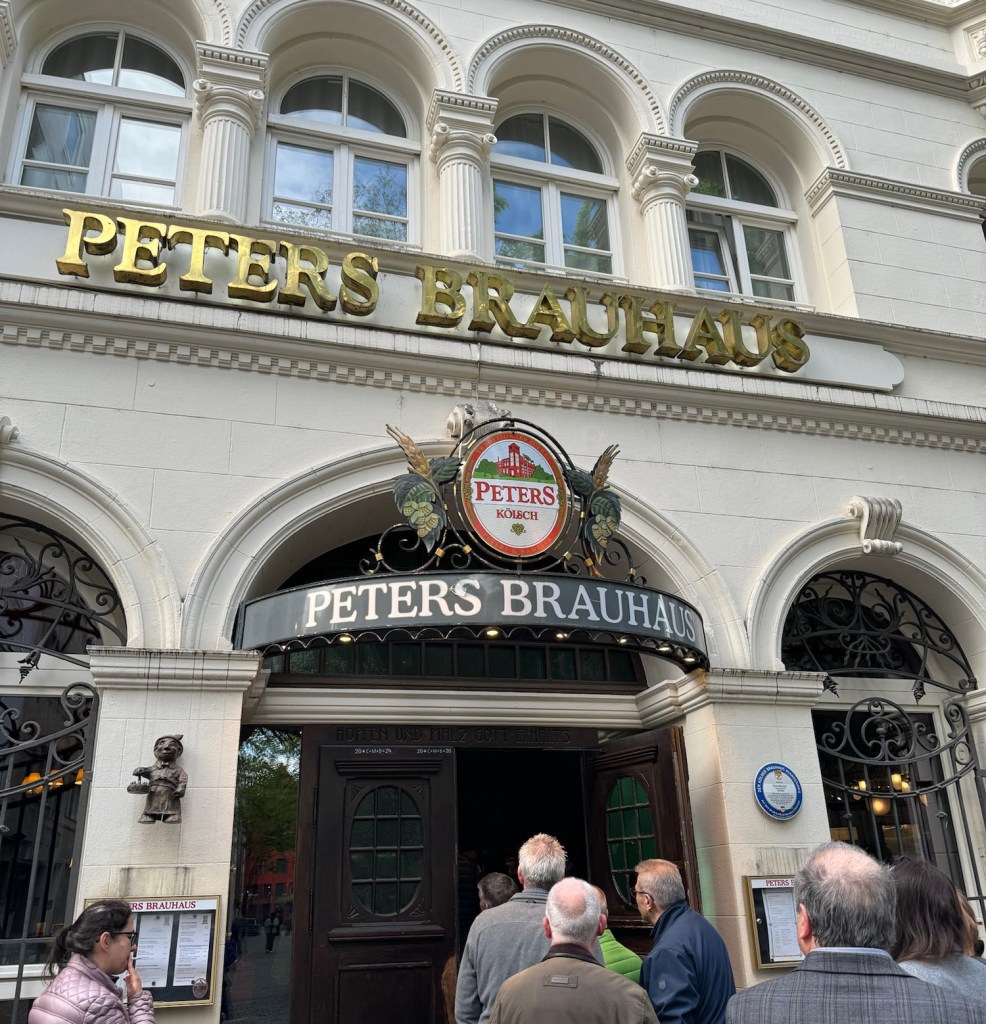
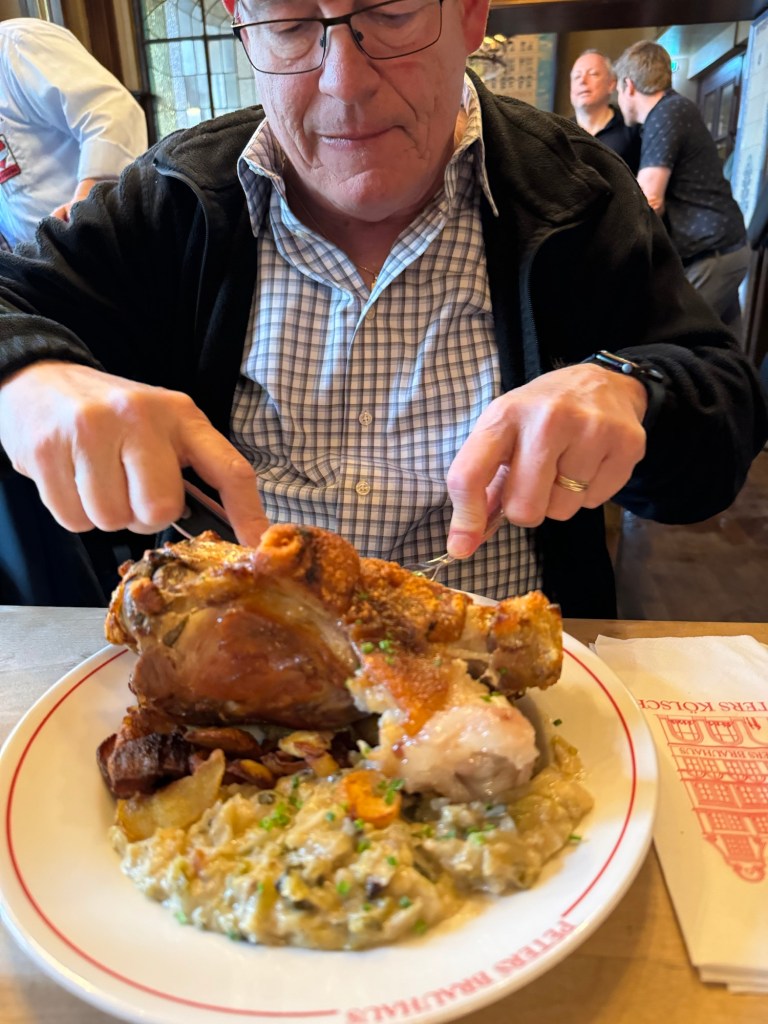
We finished up our mini beer crawl that night at Peters Brauhaus – some more Kölsch and great German food!
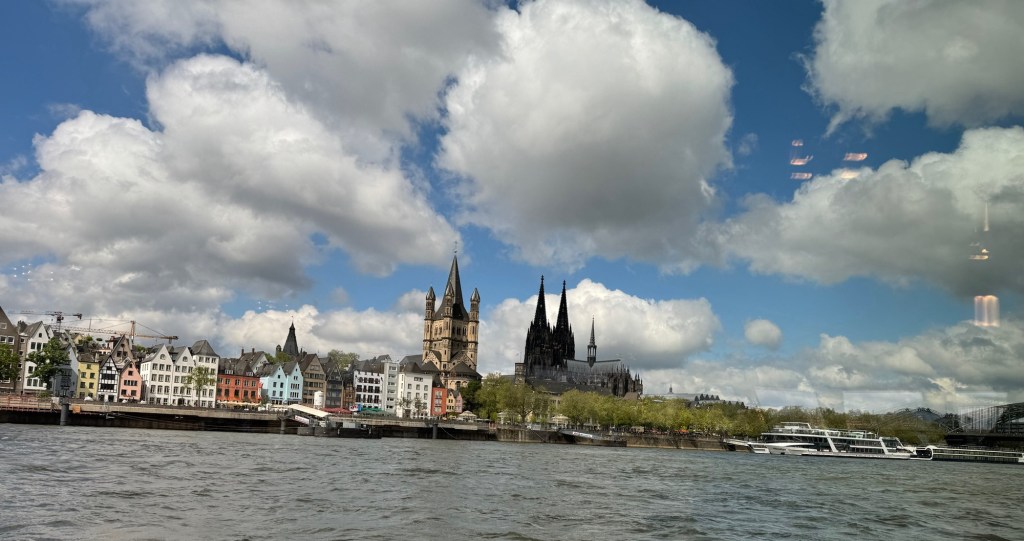
The next day was Sunday, and we decided to go on a Rhine River Cruise. Even though it was raining, it wasn’t as bad as the previous days. The boat was very comfortable, and you could order food or drinks. We cruised for 90 minutes and saw all of Cologne from the water.
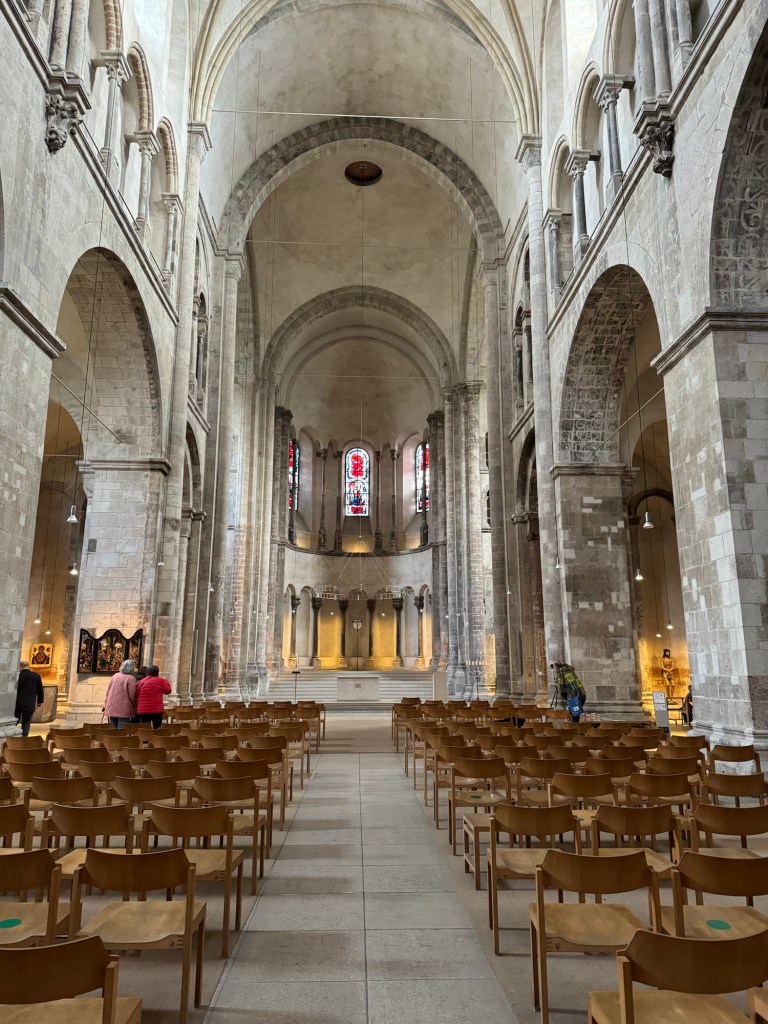
We also wanted to visit a church that we could see from our hotel room window, the Great St. Martin Church. This church’s foundations were built on the ruins of a Roman chapel, from around the year 960. During WWII, the church was heavily damaged, but has since been restored. It is well worth a visit if you are in Cologne, and is a stark reminder of the collateral damage that is done during war time.

As we walked away and into the Alter Markt we were amongst regular German families enjoying their Sunday. I started thinking about how we are only 85 years removed from the beginning of WWII, and wondering about the effect it had on these German families. Were their grandparents and great-grandparents Nazis, sympathizers, resisters, or just indifferent? How did they grow up and live knowing the atrocities that were committed by their government, and in some cases their relatives? How do they feel about it now? Lots going on in Dora’s head that day.
The rest of the day we just spent walking around the streets surrounding the Alter Markt – you can see magnificent buildings and Roman ruins without going very far, and if you are thirsty there is always a beer hall close by!
The next day was Monday, our last day in Cologne and the last day of our vacation. When we were planning our trip and had decided to make Cologne one of our stops, I knew I wanted to try to make it up to Moers. It has been my dream to go there since I started researching my family tree several years ago. My 3rd Great-Grandfather, Wilhelm Rentmeister, was from Moers and immigrated to the United States when he was in his early 30’s. Family lore has it that he and his brother stole money from the Kaiser and fled to the U.S. – something I have not been able to verify. He got married, settled in Mt. Pulaski, Illinois, became a landowner and a farmer, and had children. After his wife died and he was an old man, he decided he wanted to go back to Germany. Who knows why? He passed away in 1909 at the age of 85 and is buried in Moers.
At first I thought we would just take the train up to Moers – get on the train in Cologne, switch trains in Duisdorf, take the train to Moers, get a taxi, go to the cemetery, etc. The more I thought about it the more stressed out I got. Instead we booked a driver with Daytrip to take us to Moers. This was the best decision since I was kind of nervous and didn’t know anything about the area.
Our driver picked us up and off we went! I think we were on the Autobahn, but it didn’t matter- he was an excellent driver.
Moers is about an hour drive north of Cologne, and has a population a little over 100,000. It is close to the Dutch border, and over the years has been claimed by the Dutch, Spanish, French, and Germans (which kind of explains my lack of Germanic ethnicity through Ancestry DNA). It became part of the German empire in 1871.
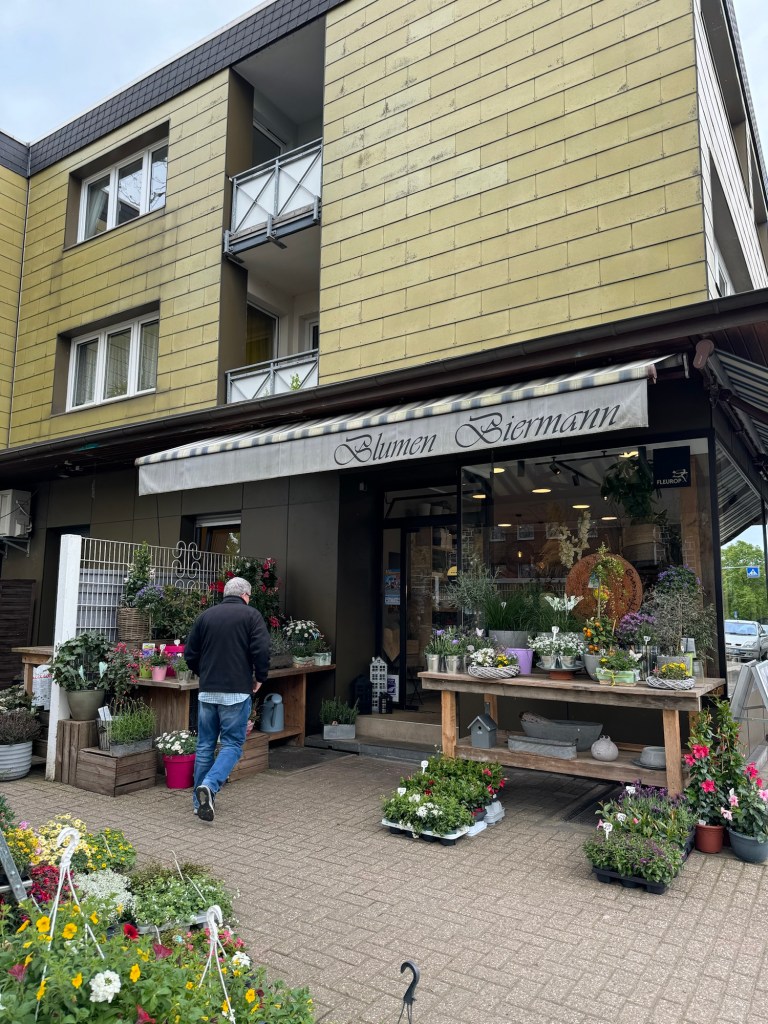
We stopped by a florist right outside of the cemetery so I could pick up some flowers. Once you get outside of the bigger cities in Germany, many people do not speak English. Luckily the florist spoke enough English so we could communicate and I was able to purchase a nice bouquet.
I told the driver to come pick us up in an hour, because I didn’t know how long it would take us to find the grave marker. I walked into the cemetery and noticed the marker right away. I had already seen what it was supposed to look like through Find A Grave, but I was shocked I was able to find it so quickly. It’s one of the biggest and oldest headstones in the cemetery, and was set off by itself in a big semicircle with four other graves. The rest of the cemetery was very uniform and beautiful – small gardens in front of the headstones, and you could tell that they were regularly tended to.

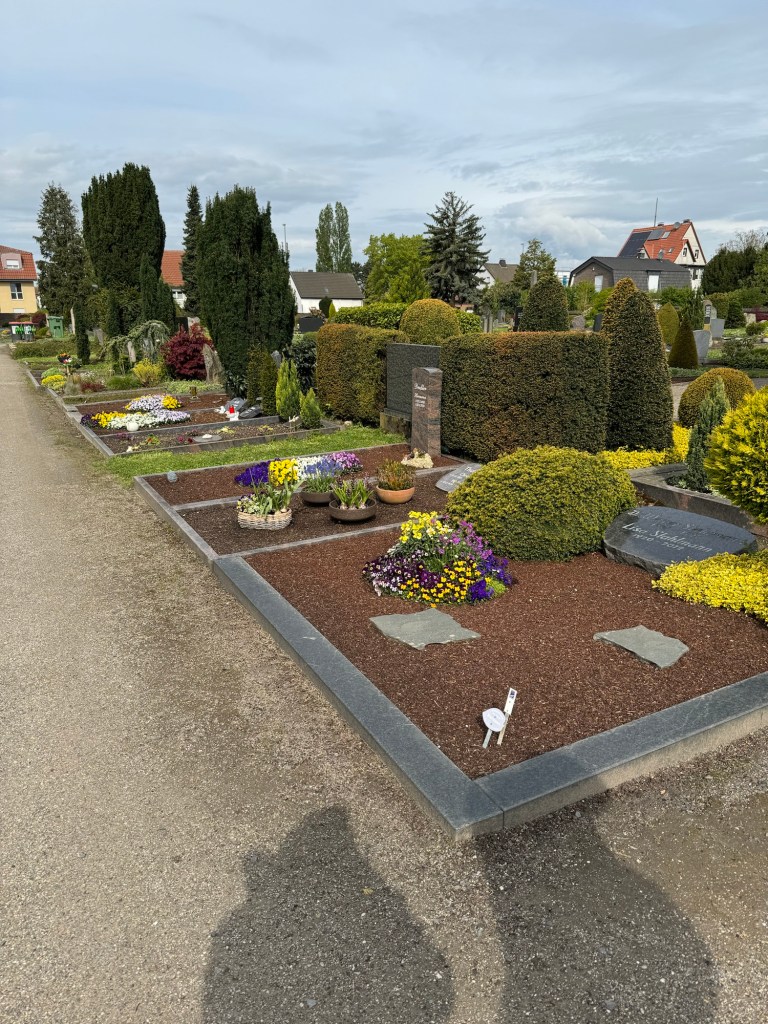
Why did Wilhelm go back to Germany? Who did he visit? There are no other Rentmeisters buried in this cemetery, so why was he buried here, in what almost looks like an area of significance in the cemetery? Lots of questions, and I hope to someday find the answers to some of them.
We walked through this beautiful cemetery until our driver came back to pick us up. I found a place for lunch – Grafschafter Wirtshaus – that was located close to a nice park and museum. Even though the menu was only in German, we were able to order with a little help from our server. Lunch was super delicious!


We headed back to Cologne, happy and well fed.
We flew out of Cologne to London early the next morning, and after a short layover on to Chicago. This was a trip that I will never forget, and I can’t wait for our next adventure!
 Tales From The Wine Store
1 thought on “Cologne and Finding My Roots”